How Is Sea Glass Made? From Broken Bottle to Frosted Gem
How is sea glass made? It starts as broken man-made glass, then waves, sand and seawater round and frost it over many years. Here is how sea glass forms, where it comes from and whether it counts as natural.
- Starts as
- Broken bottles, jars, tableware and other man-made glass
- Shaped by
- Waves rolling it against sand and stones
- Frosted by
- Slow chemical weathering in seawater
- Time taken
- Often quoted as 20 to 50 years or more
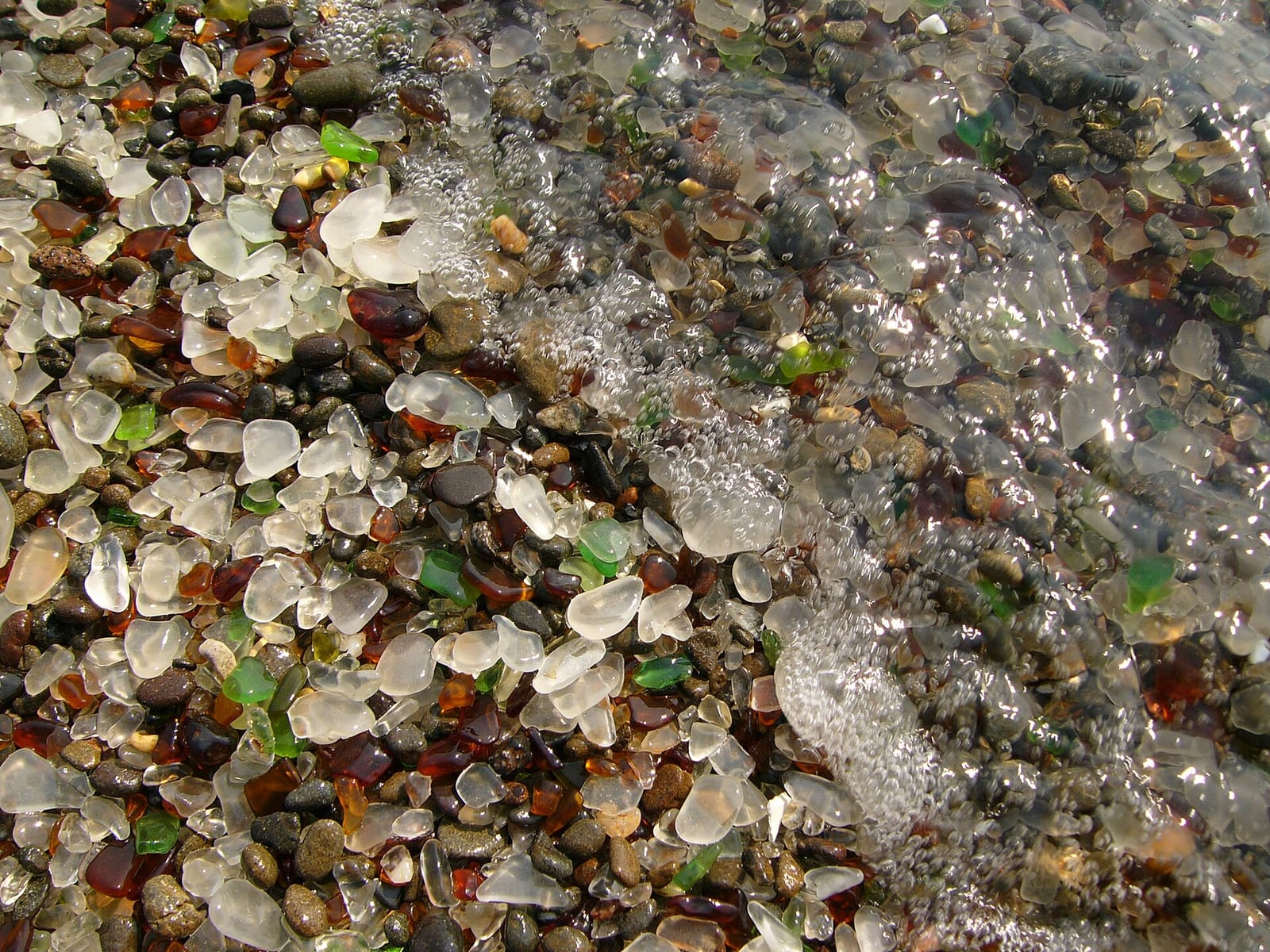
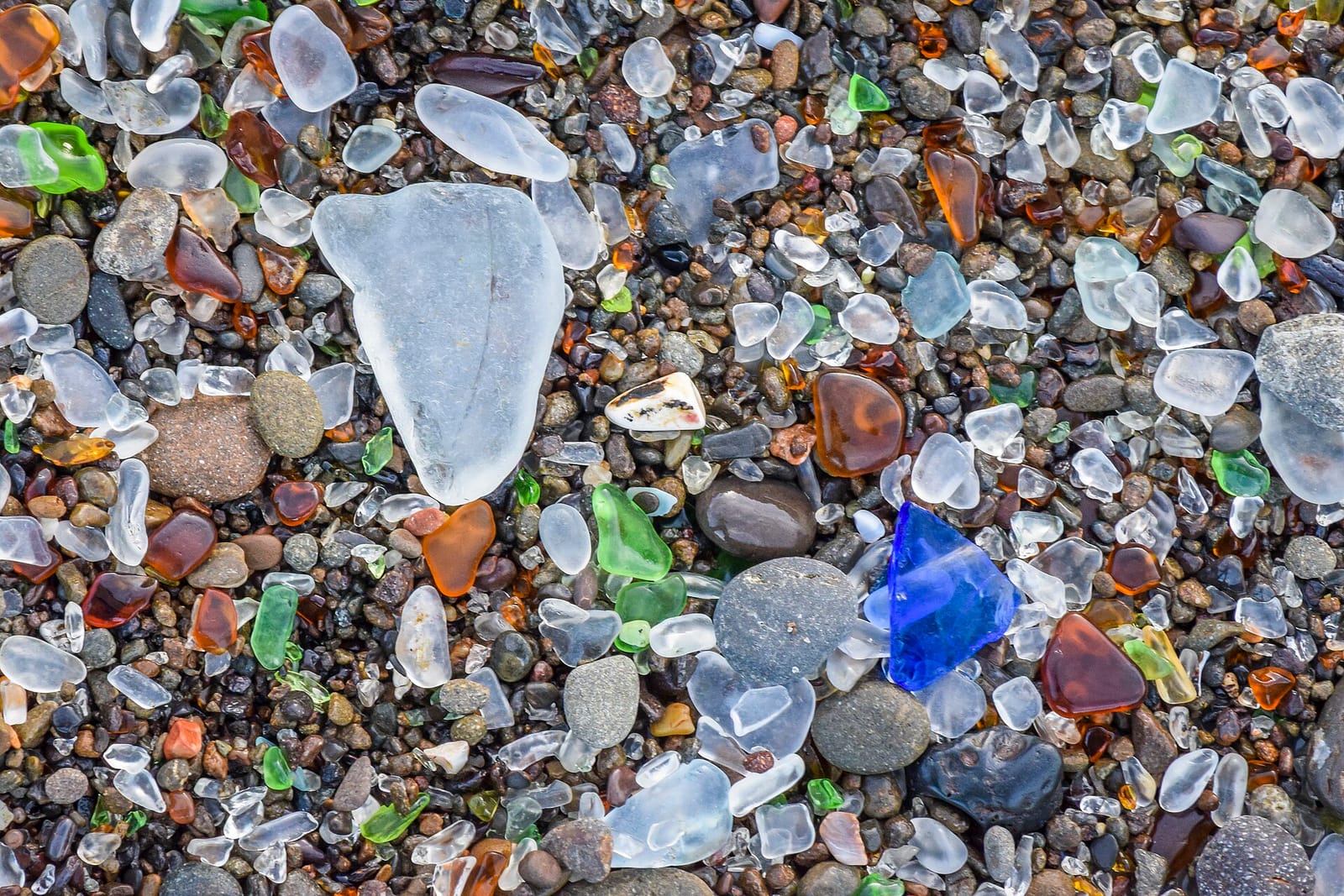
Sea glass is made when broken man-made glass, usually from old bottles, jars and tableware, ends up in the sea and is worked on by waves, sand and salt water for many years. The waves round off the sharp edges, and slow weathering in seawater gives the surface its soft, frosted look.
So sea glass is a mix of the man-made and the natural: people made the glass, and the sea did the rest. Here is how that happens, how long it takes and where all that glass came from in the first place.
How is sea glass formed?
Every piece of sea glass goes through roughly the same journey.
- The glass breaks. It starts as an ordinary glass object: a bottle, a jar, a plate, a window or a lamp. Once it is in the sea, or on a shoreline, it soon breaks into shards with sharp edges.
- Waves tumble it. Each tide rolls the shards against sand, shingle and rock. This works like a slow, natural rock tumbler, wearing away the sharp edges and corners first.
- The surface weathers. Over years, the glass reacts with seawater, and its surface gradually becomes pitted and frosted.
- It washes ashore. Storms and tides push pieces up the beach, sometimes many times over, until someone picks them up.
The shape of a piece often gives a clue to what it once was. Thick, curved pieces are often from bottle bases, while thin, flat pieces may come from window glass or tableware.
Why is sea glass frosted?
The frosted finish is the part that makes sea glass special, and it comes from two processes working together.
The first is physical. Sand and small stones constantly scratch the surface as the glass rolls around, wearing away its shine. Look closely at a well-worn piece and you may see tiny C-shaped marks, which collectors generally put down to knocks from other stones in the surf.
The second is chemical. Most everyday glass is soda-lime glass, made mostly of silica (sand) with soda and lime added. Over many years in salt water, some of the soda and lime slowly leach out of the surface. This leaves a fine, pitted layer that scatters light instead of letting it straight through, which is what we see as frosting.
This is also why genuine sea glass looks different from glass that has simply been tumbled in a machine. Machine-tumbled glass tends to have an even, uniform finish all over, while real sea glass usually has a more varied, slightly textured frost.
How long does it take for sea glass to form?
There is no exact answer, because it depends on the beach and the glass. Figures often quoted for a well-rounded, frosted piece are somewhere between 20 and 50 years, and many of the most prized pieces are far older than that.
A few things speed it up or slow it down:
- The beach. Glass on a pebbly or shingle beach with strong waves rounds off faster than glass in a sheltered, sandy bay.
- How much it moves. Glass that is buried for years and then uncovered weathers more slowly than glass rolling about in the surf.
- The glass itself. Thick glass from old bottle bases takes longer to round off than thin glass.
Pieces that still have sharp edges or a glossy surface have not been in the sea long. Many collectors call these “not done yet” and throw them back for the sea to finish.
Where does sea glass come from?
Most sea glass is the leftover of everyday life from decades ago. The main sources are:
- Household rubbish. For much of history, rubbish was dumped on clifftops, riverbanks and shorelines, or straight into the sea. Bottles and jars from those old tips are a major source.
- Ships. Bottles thrown overboard and cargo from shipwrecks have been ending up in the sea for centuries.
- Factories. Some of the best-known sea glass beaches sit below old glassworks. At Seaham in County Durham, waste glass from the town’s bottle works was tipped into the sea, which is why the beach is so well known for sea glass today.
- Coastal dumps. Glass Beach at Fort Bragg in California grew from decades of rubbish being dumped near the shore before the practice was stopped.
Because so much sea glass comes from old bottles, the most common colours are the bottle colours: white (clear), green and brown. Rarer colours come from less common objects, which is why pieces like red sea glass and blue sea glass are so sought after. Very dark glass is often from old, thick bottles, as our article on pirate glass explains.
Is sea glass natural?
Sea glass is not a natural material in the way pebbles or shells are. The glass was made by people, usually from sand, soda and lime heated in a furnace. What is natural is the weathering, which only the sea can do over such long periods.
That distinction matters in the UK. Natural materials such as sand and pebbles are protected on many beaches, but sea glass is generally treated as litter. That is why picking it up is usually fine, as we explain in our guide on whether it is illegal to collect sea glass in the UK. Always check local rules if a beach is a nature reserve or protected site.
Is sea glass running out?
Since the second half of the 20th century, plastic has replaced glass for many bottles and containers, and dumping rubbish into the sea is far less common than it once was. Many collectors feel that good sea glass is getting harder to find as a result, and that the pieces still washing up are increasingly old glass being uncovered from beaches and the seabed.
There is still plenty to find on the right beaches, though. If you want to look for your own, our beginner’s guide to finding sea glass covers tides, timing and where to look, and our list of the best UK beaches for sea glass is a good place to start.
Frequently asked questions
Is sea glass natural?
Not entirely. The glass itself is man-made, usually from old bottles, jars and tableware. What is natural is the process that turns it into sea glass: years of waves, sand and seawater rounding the edges and frosting the surface.
How long does it take for sea glass to form?
There is no fixed figure, but well-frosted sea glass is often quoted as taking somewhere between 20 and 50 years, and the best pieces may be much older. Glass on a rough, pebbly beach rounds off faster than glass in a sheltered, sandy spot.
Where does sea glass come from?
Mostly from glass that ended up in the sea by accident or as waste: bottles thrown overboard, shipwrecks, old rubbish tips on cliffs and shorelines, and factories that dumped waste glass into the sea, as the bottle works at Seaham did.
What is the difference between sea glass and beach glass?
Sea glass is usually used for glass weathered in salt water, and beach glass for glass found on the shores of freshwater lakes. Freshwater glass is shaped in much the same way but is often less frosted. Many people use the two names interchangeably.
Why is sea glass frosted?
The frosting comes from two things working together. Sand and stones scratch and pit the surface, and over many years seawater slowly draws some of the soda and lime out of the glass, leaving a fine, pitted surface that scatters light and looks frosted.